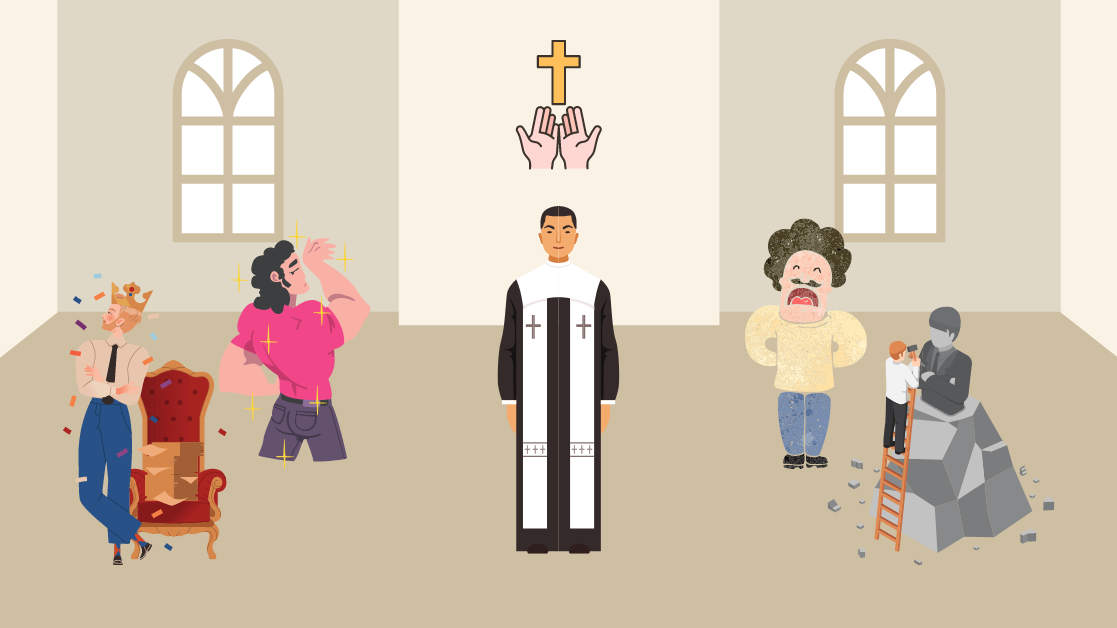
Short answer: Yes, pride is a sin when it is excessive self-regard that takes credit God deserves and puts me at the center. The Bible says plainly that God opposes the proud. But not all pride is sinful: gratitude for honest work, for your family, or for what God has done through you is not the pride Scripture warns against. The line is whether the glory goes to God or to me.
In This Article
The word "pride" carries two meanings in everyday speech. A parent says "I'm proud of you" and means love. A different person is "full of pride" and means arrogance. The Bible recognizes both uses, and that is why people ask whether pride is always wrong, whether being happy with an accomplishment counts, and why Scripture speaks so harshly about it.
People in the pews kept asking me these questions, so let me go through them one at a time from Scripture.
What Does The Bible Say About Pride?
Pride is defined as a high or excessive opinion of one's own worth, merit or superiority. It can live quietly in the mind or show itself in behavior. It can be obvious, like boasting, or sneaky, like fishing for compliments, worrying constantly about how we look, or even turning inward into a harsh and critical view of ourselves.
The language of Scripture on this is direct:
Pride goes before destruction, a haughty spirit before a fall.
Proverbs 16:18 (NIV)
God opposes the proud but shows favor to the humble.
James 4:6 (NIV)
That second verse is sobering. The word "opposes" is a military term, as if God lines up against the proud. To be proud is not simply to have a bad attitude; it is to stand in the way of the One who gives grace. When we act with pride we break the greatest commandment, to love God above all else, because we have begun to love ourselves above him.
Is All Pride Sinful?
No. This is where many people get tangled, so let me be careful. The Bible encourages us to work hard and to be glad of good work. It also invites us to take a right kind of pride. Paul tells believers to test their own work, and then:
Each one should test their own actions. Then they can take pride in themselves alone, without comparing themselves to someone else,
Galatians 6:4 (NIV)
In a sense we are even expected to be glad about honest achievements. We receive everything we have from God, so as long as you acknowledge that you could not have done it without him, it is fine to feel good about what you have accomplished. Jesus said it plainly in John 15:5, that apart from him we can do nothing. Good pride gives God the glory. That is the test.
| Healthy Satisfaction | Sinful Pride |
|---|---|
| Thanks God for the ability and the result | Takes the credit for oneself |
| Celebrates others' success | Resents or competes with it |
| Receives correction | Defends and deflects |
| Measures work against what God asked | Measures worth against other people |
| Rests in grace | Needs to be noticed |
Pride becomes dangerous when we take credit for what we've accomplished rather than acknowledging God's help. Refusing to acknowledge his control over all things is a sign of sinful pride. Alternatively put, anything that removes God from the center of the heart is serious, and anything that puts me on the throne of my own life is a problem. Paul asked the Corinthians a question every proud heart should hear:
What do you have that you did not receive? And if you did receive it, why do you boast as though you did not?
1 Corinthians 4:7 (NIV)
Why Is Pride Called The Root Of Sin?
Because the oldest sins in Scripture begin there. The serpent told Eve something that sounded like promotion:
For God knows that when you eat from it your eyes will be opened, and you will be like God, knowing good and evil.
Genesis 3:5 (NIV)
Adam and Eve fell for the idea that they could be like God. Many Christians also read Isaiah 14 and Ezekiel 28, passages addressed to the kings of Babylon and Tyre, as echoing the fall of Satan, who wanted the throne and the glory that belong to God alone. That reading is traditional rather than certain, but the pattern is clear either way. In Isaiah 14:12-14 the speaker boasts of raising his throne above the stars of God.
Since then people have found it hard to place their lives and circumstances in the hands of God, our Creator and Father. Our sinful nature shows up in three ways:
- Self-reliance: I can handle this without God.
- Self-centeredness: It is all about me.
- Self-condemnation: My failures are bigger than his grace. This is pride too, because it trusts my verdict over his.
Because pride feeds the other sins, the church has long treated it as the most serious. It sits at the head of the traditional list in The Seven Deadly Sins. That does not make every other sin small, and the Bible does not rank them neatly, as I explain in Are All Sins Equal? but pride is a door through which the others walk.
God deals with it directly. Isaiah says of the day of judgment:
I will put an end to the arrogance of the haughty and will humble the pride of the ruthless.
Isaiah 13:11 (NIV)
We are good at spotting pride in other people and bad at spotting it in ourselves. When it annoys me in someone else, it is often because I recognize it. Earthly achievements and an unhealthy reliance on, or admiration for, another person will all be stripped away someday, and we will stand before God, who remains. Pride tries to convince us we can earn the peace Christ already bought; it sends us on an endless chase. Even Jesus did not trust the crowd's admiration; John 2:24-25 says he knew what was in people.
What Is The Opposite Of Pride?
Humility. Not self-hatred, not putting yourself down, and not pretending you have no gifts. Humility is seeing yourself accurately in light of who God is. A humble person can say "I did that well" and "I could not have done it alone" in the same breath.
Jesus is the model. He had every right to claim glory, yet the Word became flesh and chose lowliness. Paul puts it this way:
Do nothing out of selfish ambition or vain conceit. Rather, in humility value others above yourselves,
Philippians 2:3 (NIV)
The promise attached is generous. When we submit to the Lord, he lifts us up. See James 4:10. We do not need to promote ourselves, because he does the lifting at the right time.
How Do You Fight Pride?
I would start by watching for the signs that usually go with it. Pride is rarely loud. It hides behind fear of what others think, a sense of entitlement, ingratitude, people-pleasing, prayerlessness, hypocrisy and rebellion. If you recognize two or three of those in yourself, that is not a verdict. It is a map. Related struggles are covered in Is Fear A Sin In The Bible? and Is Jealousy A Sin In The Bible?
Here is what I would do, practically:
- Start with thanks. Name three things this week you did not earn. Gratitude is the natural enemy of pride.
- Pray honestly. Prayerlessness is quiet pride, because it says I can manage. Ask the Holy Spirit to show you what you cannot see.
- Welcome correction. Choose one trusted person and ask them where you come across as arrogant or defensive. Then listen without arguing.
- Serve where no one notices. Pride thrives on an audience.
- Keep your eyes on Christ. God's gift of faith kills pride, because faith by nature looks outside itself.
Through prayer and the study of God's Word, the Holy Spirit convicts us of the bonds of sin and leads us through sanctification to freedom. We must have ears to hear and courage to follow. For the bigger picture of what the Bible means by sin, read What Is Sin? and if you feel you have gone too far, God forgives the humble who come to him.
Key Bible Verses About Pride
- Proverbs 16:18: pride goes before destruction and a haughty spirit before a fall.
- Proverbs 11:2: pride brings disgrace, but humility brings wisdom.
- James 4:6: God opposes the proud and gives grace to the humble.
- James 4:10: humble yourselves and God will lift you up.
- 1 Corinthians 4:7: everything we have, we received.
- Luke 18:14: those who exalt themselves will be humbled.
- Philippians 2:3: value others above yourselves.
Frequently Asked Questions
Is it a sin to be proud of your children or your work?
No. Gratitude and satisfaction in a job well done or in people you love are healthy, and Paul himself speaks of taking pride in the right way. It turns sinful when the pride becomes about your own greatness, when you take credit for what God gave, or when you look down on others.
Why is pride called the root of all sin?
Because at bottom, every sin says that I know better than God what is good for me. Eve's reach for the fruit and Satan's fall are both told as stories of wanting to be like God. Christian teachers have long placed pride first on the list of the seven deadly sins for that reason.
What is the difference between pride and confidence?
Confidence rests on what God has done and promised, and it can sit comfortably beside humility. Pride rests on myself. A confident person says thank you and gives God the credit; a proud person says I did this and needs others to notice.
Is pride the same as vanity?
They overlap but are not identical. Pride is an inflated sense of one's worth or independence from God. Vanity is more about image and appearance. I take up the second in Is Vanity A Sin In The Bible?
Will God forgive pride?
Yes. Pride is a real sin but it is not the unforgivable one. The cure is repentance, and God promises grace to those who humble themselves. See Does God Forgive All Sins?