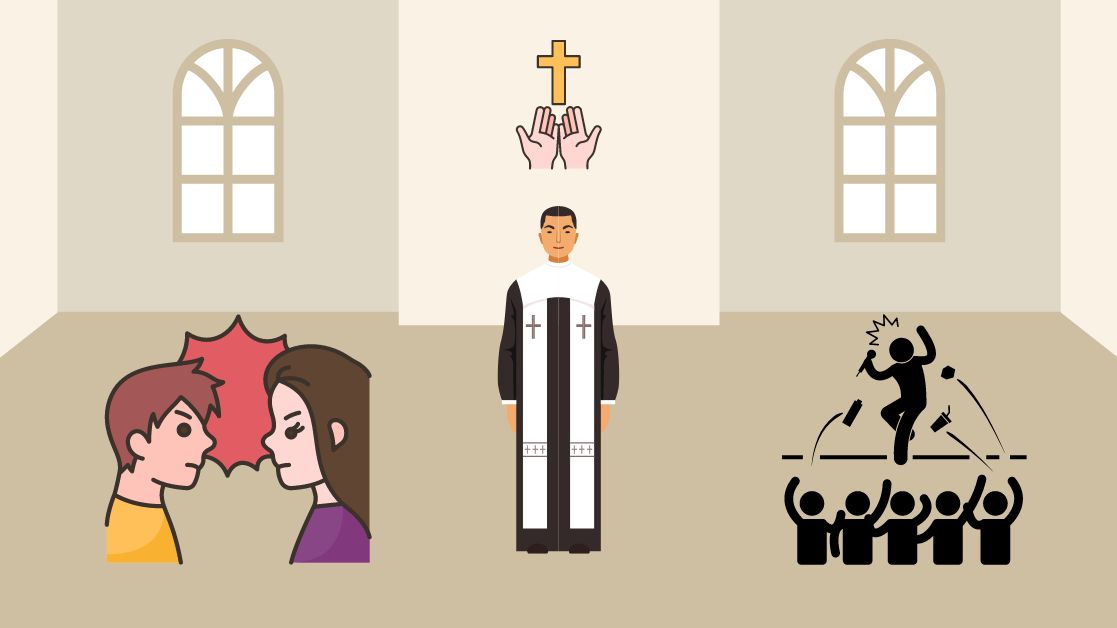
Short answer: Yes. Hating a person is a sin in the Bible. Leviticus 19:17 says not to hate a fellow Israelite in your heart, and 1 John 3:15 says anyone who hates a brother or sister is a murderer. God does hate evil, and we are told to hate evil too, but never to hate the people made in his image.
In This Article
The question usually arrives with a name attached. A parent who walked out, a boss who humiliated someone, a person who did something unforgivable. Nobody asks "is hate a sin?" in the abstract at eleven at night. They ask because they feel it and suspect that God sees it.
He does see it, and he takes it seriously. This article walks through what Scripture says about hating people, what Jesus taught about it, the places where the Bible says God hates something, and one of the most misunderstood sayings of Jesus, the command to "hate" father and mother.
What Does God Say About Hating People?
The Bible defines hatred mostly by showing what it is not. God is love, so hatred is the moral opposite of his character. It shows up in Scripture as the engine behind a great deal of evil: quarrels, slander, revenge and violence. One short proverb says it plainly.
Hatred stirs up conflict, but love covers over all wrongs.
Proverbs 10:12 (NIV)
The Old Testament Law already forbade it. Leviticus 19:17 goes after the heart, not just the hand: you are not to hate your neighbor in your heart. The same verse tells you to speak to the person frankly rather than let resentment grow in silence. Hatred left to ferment is the problem. Honest, loving confrontation is the cure.
The New Testament tightens the screw. John writes to believers and says that hatred and the life of God do not live in the same place.
Anyone who hates a brother or sister is a murderer, and you know that no murderer has eternal life residing in him.
1 John 3:15 (NIV)
That is a strong sentence, and I want to be careful with it. John is not saying every flash of bitterness cancels a person's salvation. He is describing a settled posture. Someone who claims the light of Christ while holding a brother or sister in permanent contempt has a contradiction at the center of their faith, and John wants it faced. For the struggling believer who hates the hatred in themselves, the next step is repentance, which God honors every time.
Is Hate The Same As Anger?
No, though they are neighbors. Anger can be a quick response, and Scripture allows for it when it is aimed at injustice and not allowed to harden. Hatred is anger that has taken up residence. It wants the other person diminished or gone. Anger left unattended often becomes hatred, which is why I wrote a separate article on whether anger is a sin. Hatred is also the soil in which bullying and cruelty grow.
Hatred also rebels against God in a specific way. It denies that the other person bears his image. Once we stop seeing someone as made by God, nearly anything starts to seem permissible toward them.
What Did Jesus Teach In Matthew 5?
In the Sermon on the Mount, Jesus took the commandment against murder and moved it inside the heart. Hating or despising a brother carries the same root as killing him. In the same chapter he addresses a popular saying of his day about neighbors and enemies.
You have heard that it was said, ‘Love your neighbor and hate your enemy.’ But I tell you, love your enemies and pray for those who persecute you,
Matthew 5:43-44 (NIV)
The Old Testament never said "hate your enemy." That line was a human addition, a convenient tightening of the circle of neighbors. Jesus rejects it and widens the circle until it includes people who actively harm us. Then he does something even harder: he tells us to pray for them.
Notice what he does not ask. He does not ask us to pretend the harm was small, or to feel warm toward the person, or to let them back into a position where they can hurt us again. Love of enemies is a decision of the will: wish them well, refuse to pay back evil, pray for their good. Feelings often follow later, and sometimes they never fully arrive, but the obedience still counts.
Jesus lived this. On the cross he prayed for the people who were killing him. That is the standard, and it is also the reason we can reach for it. We did not earn forgiveness either.
Does God Hate Anything?
Yes. The Bible says plainly that God hates certain things, and it would be dishonest to skip over it. Proverbs gives a list.
There are six things the Lord hates, seven that are detestable to him: haughty eyes, a lying tongue, hands that shed innocent blood,
Proverbs 6:16-17 (NIV)
Look at the list: pride, lying, violence, a heart that plots wickedness, those who stir up conflict in families. God's hatred is aimed at what destroys people. It is not irritation. It is the opposition of a holy God to things that wreck the creatures he loves.
This is why the New Testament can say both "God is love" and tell us to hate what is evil. Romans 12:9 says to hate what is evil and cling to what is good. The difference between God's hatred and ours is what we usually do with it. We attach it to people we dislike. God attaches his to evil and offers its victims, and its perpetrators, a way out through Christ. If you want to see how that line works in practice, read what the Bible says about hating the sin and loving the sinner.
A caution is in order. Some people point to verses like Romans 9:13, which speaks of Jacob loved and Esau hated, to say God hates certain people. In context, that is covenant language about whom God chose for a particular purpose in history, not a permission slip for us to hate anyone. I would not build a doctrine of personal hatred on it.
What Does "Hate Your Father And Mother" Mean?
This one trips people up because it sounds like Jesus is contradicting himself.
If anyone comes to me and does not hate father and mother, wife and children, brothers and sisters
Luke 14:26 (NIV)
The same Jesus who says this also commands us to honor our parents and condemns those who dodge that duty. So he cannot mean "feel malice toward your family." The word "hate" here is a comparison. In the way people spoke in that culture, "hate" could mean "love less" or "put second." Matthew records the same teaching in softer wording.
Anyone who loves their father or mother more than me is not worthy of me;
Matthew 10:37 (NIV)
So the point is priority. Following Christ comes before family approval, family tradition, even family peace. For a first-century Jew or Gentile who became a believer, that choice could mean being cut off. Jesus wanted people to count that cost before they signed up. It is a statement about loyalty, not a license for malice. If you want to think about how this plays out at home, my article on what the Bible says about family covers the honor we still owe.
How Do You Let Go Of Hate?
Hatred does not usually leave on command. A few practical steps from Scripture help.
Name it to God
Tell him what you actually feel. The psalms are full of raw honesty before God. He is not shocked, and bringing it into the open is the first step out of it. Ask him to show you what lies underneath: hurt, fear, a sense of injustice.
Stop feeding it
Hatred is sustained by rehearsal. Every replay of the offense, every conversation that keeps the case open, every scroll through that person's social media, adds fuel. Paul tells us to get rid of bitterness and rage and malice. That means actively cutting off what keeps them burning.
Pray for the person by name
Jesus gave this as a command in Matthew 5. It is hard at first, and it does something to the one praying. You cannot pray sincerely for someone's good and stay fully committed to wanting them destroyed.
Forgive, and separate forgiveness from trust
Forgiveness is releasing the debt, not pretending nothing happened and not handing the person a key to your life again. You can forgive someone and still keep boundaries, especially if they have been abusive. Read Does God Forgive All Sins? to see how much has been forgiven us.
Get help if it runs deep
If your hatred comes from serious wrong done to you, talk to a pastor, a trusted believer or a counselor. That is not weakness. The deepest wounds rarely heal in isolation. If you are carrying hatred out of fear of what someone might do, tell someone and consider your safety first.
Key Bible Verses About Hate
- Leviticus 19:17: do not nurse hatred in your heart; speak honestly and be rid of it.
- Proverbs 10:12: hatred stirs up conflict, and love covers wrongs.
- Matthew 5:43-44: Jesus tells us to love our enemies and pray for those who persecute us.
- Romans 12:9: hate what is evil and cling to what is good.
- Ephesians 4:31: get rid of bitterness, rage, anger and every form of malice.
- 1 John 2:9: claiming the light while hating a brother or sister leaves you in the dark.
- 1 John 3:15: hating a brother or sister is murder in the heart.
- 1 John 4:20: you cannot love God, whom you have not seen, while hating a brother you have.
Frequently Asked Questions
What does God say about hating?
God forbids hating people. Leviticus 19:17 says not to hate a fellow Israelite in your heart, and 1 John 3:15 treats the one who hates a brother or sister as a murderer in the heart. What God does hate is evil, injustice and pride, and he asks his people to share that settled opposition to wrong without turning it on image bearers.
What is the number one worst sin?
Scripture never hands us a ranked list with one sin on top. Some sins wreck more lives than others, and hatred that ends in violence is among the worst. Still, every sin separates us from God and every sin is forgiven in Christ. I take this up in The Greatest Sin In The Bible.
Is it a sin to hate yourself?
Self-hatred is not what Jesus commands, and it often hides a different problem: refusing to believe what God says about you. Psalm 139:14 says we are fearfully and wonderfully made. Grieving over your sin is right. Despising the person God made and Christ died for is not.
Is hating evil a sin?
No. Romans 12:9 tells believers to hate what is evil and cling to what is good. The line is between hating wrong and hating the person who does it. Our opposition to evil should come with a willingness to see wrongdoers forgiven, as we were.
Can a Christian hate someone and still be saved?
Christians do struggle with hatred, and the answer to that struggle is repentance, not despair. First John warns that a settled, unrepented pattern of hating a brother or sister is a serious sign that something is wrong in the heart. If you feel that hatred and it troubles you, bring it to God. Read How To Repent for the next steps.