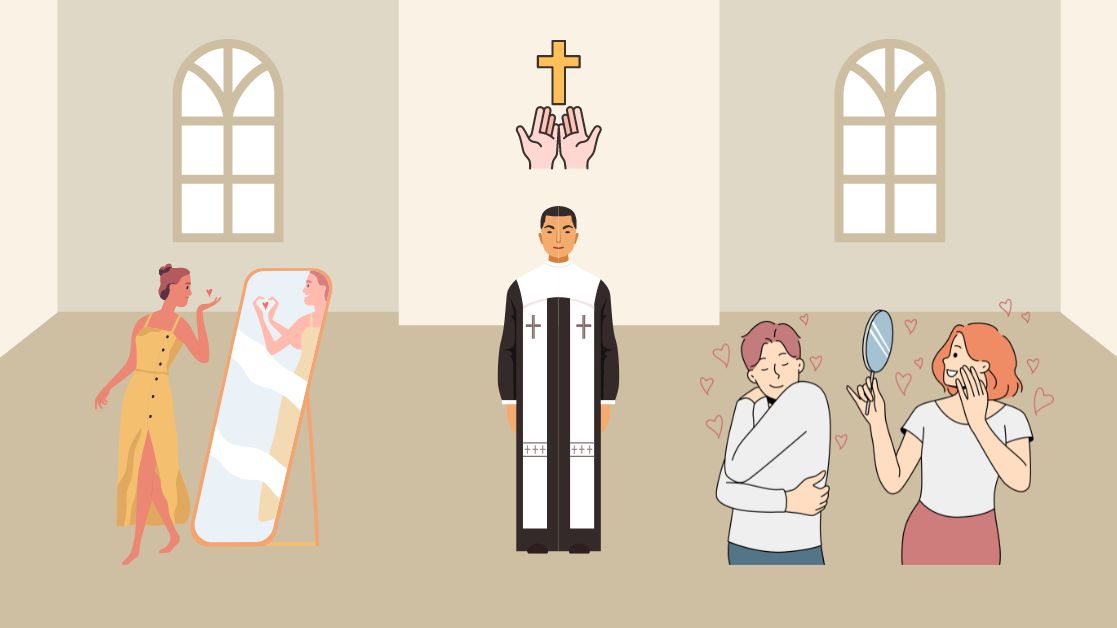
Short answer: Yes. Vanity, meaning excessive pride in yourself, your looks or your achievements, is a sin in the Bible. It grows out of pride and shifts the glory that belongs to God onto ourselves. The Bible also uses "vanity" to mean emptiness, as in Ecclesiastes, where life lived apart from God is called meaningless.
In This Article
The word "vanity" carries two meanings in Scripture, and mixing them up causes a lot of confusion. In everyday speech it means obsession with your own appearance or importance. In older Bible translations, especially of Ecclesiastes, it means something closer to emptiness or vapor.
Both meanings bear on the question. This article takes them in turn, then looks at the practical matter that many readers are really asking about: is it wrong to care how you look, and what do you do when you recognize vanity in yourself? Vanity is closely related to pride, and the two are hard to separate.
What Does Vanity Mean In Scripture?
In the Bible, vanity shows up in at least two ways. The first is the self-focused sense we know today. A vain person holds an inflated view of their worth, craves admiration and organizes their life around how they appear to others. Paul addresses it head on.
Do nothing out of selfish ambition or vain conceit. Rather, in humility value others above yourselves,
Philippians 2:3 (NIV)
The second sense is emptiness. The Hebrew word behind many "vanity" passages describes something like breath or vapor, something that cannot be held. That is the sense we meet in Ecclesiastes. The two senses meet in a hard truth: a life built on self-image is exactly the kind of life that turns out to be vapor.
Jesus is the opposite of vanity. He had every right to demand honor and instead took the form of a servant (Philippians 2:5-8). The believer is called to share that mind. That means vanity is not a harmless quirk of modern culture. It is a way of living that runs in the opposite direction from Christ.
It helps to separate vanity from healthy self-respect. God made us and calls his work wonderful. The psalmist says he is fearfully and wonderfully made (Psalm 139:14). Gratitude for how God made you is not vanity. Vanity starts when the thanks disappear and the admiration stays on you.
What Does Ecclesiastes Mean By "Meaningless"?
Ecclesiastes opens with a famous cry. Older translations render it "vanity of vanities."
"Meaningless! Meaningless!" says the Teacher.
Ecclesiastes 1:2 (NIV)
The book calls its author "the Teacher," and Jewish and Christian tradition has long linked the book with Solomon, a king who had wealth, wisdom, pleasure and building projects beyond anything his neighbors could imagine. Whoever the author was, the book describes a man who tried everything "under the sun" and found that none of it satisfied by itself.
The Teacher puts it this way later on: all of it was a chasing after the wind (Ecclesiastes 1:14). Pleasure, work, wealth and achievement all vanish like breath if they are what we live for. The sting is that these things are not evil. They are just too small to carry the weight of a human soul.
Now all has been heard; here is the conclusion of the matter: Fear God and keep his commandments, for this is the duty of all mankind.
Ecclesiastes 12:13 (NIV)
That is where the book lands. The cure for emptiness is not more success or a better image. It is fearing God and living as his creature. When Ecclesiastes uses the word "meaningless," then, it is not mere pessimism. It is an honest diagnosis that points to a remedy.
For our question, the link is this. The vain person is chasing the exact thing Ecclesiastes calls vapor: their own glory. They will never catch it, and in the chase they usually neglect the people and the God who could give them real life.
When Does Caring About Appearance Become Sin?
Is it wrong to wear nice clothes, style your hair or want to look presentable? No. Scripture never condemns cleanliness, care or beauty. The Bible celebrates beauty in many places, and nothing in it says that a Christian must look drab.
The line is drawn at the heart. Peter speaks to this directly.
Your beauty should not come from outward adornment, such as elaborate hairstyles and the wearing of gold jewelry or fine clothes. Rather, it should be that of your inner self, the unfading beauty of a gentle and quiet spirit, which is of great worth in God's sight.
1 Peter 3:3-4 (NIV)
Peter is not banning jewelry. He is setting priorities. Where does your time, money and attention go? Which do you invest in more: the outer person that fades or the inner person that God sees? Samuel learned the same lesson when God sent him to anoint a king: people look at the outward appearance, but the Lord looks at the heart (1 Samuel 16:7).
Here are some honest questions that help sort care from vanity:
- Am I hurt, or angry, when someone doesn't notice or praise how I look?
- Do I measure my worth by likes, comments or compliments?
- Do I look down on people who care less, or who cannot afford what I wear?
- Would I be able to go a day without checking myself and not feel anxious?
- Do I spend more effort on how I appear than on how I treat people?
If the answers are uncomfortable, that is information, not condemnation. Social media makes the temptation constant, because a feed rewards the polished image. Vanity can also turn on yourself. A person obsessed with appearance may despise themselves whenever they fall short of their own standard. That is the same self-focus in a harsher form. The answer is not self-love in the cultural sense, and it is not self-hatred. It is a settled identity in Christ.
The Bible's example of vanity coming to ruin is Saul. He was a head taller than the people and chosen to be king. When God commanded him to obey, he preferred his own judgment and his standing before the people. Samuel confronted him in 1 Samuel 15, and Saul's first concern was still that Samuel honor him in front of the elders. The kingdom moved to David. I won't claim to read Saul's final motives, but the pattern is clear: a man more worried about his image than about obeying God.
How Do You Pray Against Vanity?
The best place to start is honesty. Tell God where you see it, and ask him to change your wants, not only your behavior. Here are a few prayers drawn from Scripture, put in plain words.
Turn my eyes. The psalmist asks God to turn his eyes from worthless things and preserve his life by the Word (Psalm 119:37). It is a short, usable prayer for the moments when the mirror or the phone has taken over your attention.
Make me small and you great. John the Baptist said that Christ must increase and he must decrease. Praying that way gradually reorders what we want.
Show me what I'm chasing. Ask God to expose where you're living for admiration. This is a prayer for the Spirit's conviction, and he answers it.
Give me a servant's heart. Vanity shrinks in the presence of service. Pick one concrete thing: write a note to someone, show up at a hard task, do something nobody will see. Doing the opposite of self-display trains the heart.
Be patient with the process. Vanity is a habit of the heart and has often been practiced for years. Repentance is a daily turning, and God forgives each time we bring it to him (how to repent walks through it). Sin, including this one, is not something Christ leaves us to beat alone. For the broader frame, see what sin is according to the Bible.
Key Bible Verses About Vanity
- Ecclesiastes 1:2: everything pursued apart from God is vapor.
- Proverbs 31:30: charm is deceptive and beauty fleeting, but the one who fears the Lord is to be praised.
- Proverbs 16:18: pride goes before destruction.
- Philippians 2:3: do nothing out of vain conceit; value others above yourselves.
- Galatians 5:26: do not become conceited, provoking and envying one another.
- Romans 12:3: do not think of yourself more highly than you ought.
- 1 Peter 3:3-4: real beauty is the unfading beauty of a gentle and quiet spirit.
- 1 Samuel 16:7: people look at outward appearance, but the Lord looks at the heart.
Frequently Asked Questions
Is vanity a sin according to the Bible?
Yes. Vanity in the sense of self-admiration, living for your own image and glory, is condemned throughout Scripture. Philippians 2:3 tells us to do nothing out of vain conceit. Ordinary care for your appearance is a different matter and is not condemned.
What type of sin is vanity?
Vanity is a form of pride. It turns attention, praise and worth toward yourself instead of toward God and other people. For the bigger picture, see Is Pride A Sin In The Bible?
What is the root sin of vanity?
The root is pride, the old desire to be at the center in God's place. Vanity is that pride showing up in how we look, what we own and what people think of us. Proverbs 16:18 warns where unchecked pride ends.
What is the number one worst sin?
The Bible does not rank sins in a single list with one at the top. Pride is described as the root of many others, and the Bible warns hard against it, but every sin is forgiven in Christ. See The Greatest Sin In The Bible.
How do you pray against vanity?
Ask God to turn your eyes from worthless things, as the psalmist does in Psalm 119:37. Ask him to make you more interested in his approval than in the mirror or the screen. Then repent where you see it, and look for a concrete way to serve someone else this week.
What does vanity mean spiritually?
Spiritually, vanity has two meanings in the Bible. One is emptiness, the Ecclesiastes sense of anything pursued apart from God. The other is self-centered pride in yourself. The two are linked, because living for yourself is exactly the kind of life Ecclesiastes calls empty.